
Ashland Metal Roof Coating
We coat commercial metal roofs in Ashland, KY. Crews seal laps and screw heads, prime rust, and roll a flexible coat over warehouses, shops, and church halls.
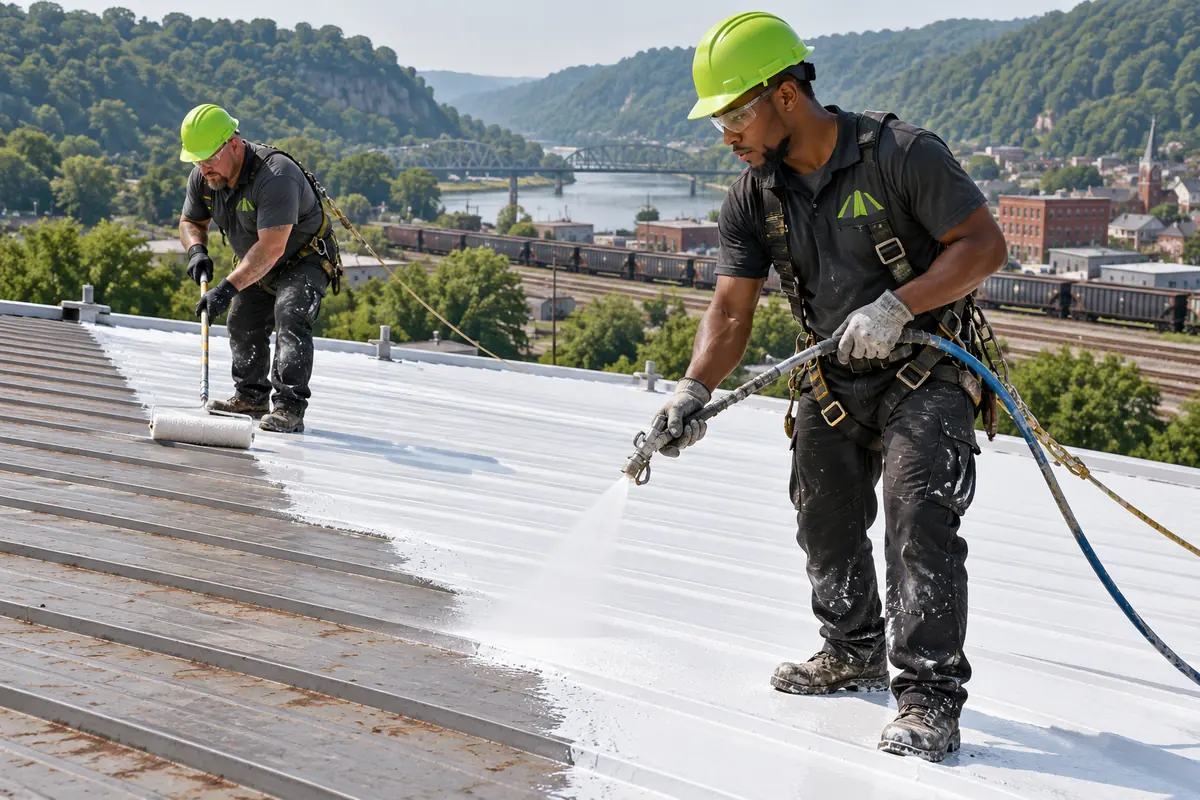
Roof inspected before any coating
Every exposed fastener checked
Laps reinforced before the field coat
Most buildings stay open during work
Metal Roof Coating Problems Behind Ashland Leaks
Most owners notice a metal roof problem from inside first. Each pair ties what shows up in the building to the roof detail behind it.
Drips Along A Screw Line
Inside The BuildingDrops land in a straight row across the shop floor after a hard rain, often under the same purlin.
On The RoofRubber washers on R-panel screws have dried and cracked, or the screws have backed out. We tighten or replace them, then cover each head before coating.
Stains Under A Panel Lap
Inside The BuildingBrown streaks run down the underside of the deck where two panels overlap, worst near the eave.
On The RoofOld sealant in the side lap or end lap has split as the steel moves each day. The lap is cleaned and covered with reinforcing fabric set in coating.
Rust Flakes On Stored Stock
Inside The BuildingOrange grit collects on shelving and equipment, and pinholes of daylight show through the deck.
On The RoofScale has formed on panels and laps. Loose rust is brushed off and primed, and spots rusted through are cut out and patched with new steel.
Water By The Rooftop Unit
Inside The BuildingCeiling stains spread around the supply duct or the unit’s condensate line.
On The RoofWater backs up on the upslope side of the curb and finds the flashing seams. Curbs get sealed with fabric, and a low spot there is a case for silicone.
Overflow At The Eaves
Inside The BuildingWater sheets down the wall or over a loading door instead of leaving through the downspouts.
On The RoofGutters are packed with leaves and their seams have opened. We clear them before washing, reseal seams and end caps, and check where downspouts drain.
Five Ways We Coat A Commercial Roof
Each system fits a different roof. The list on every card names the spots where water usually gets into that roof, which are the first places we seal.
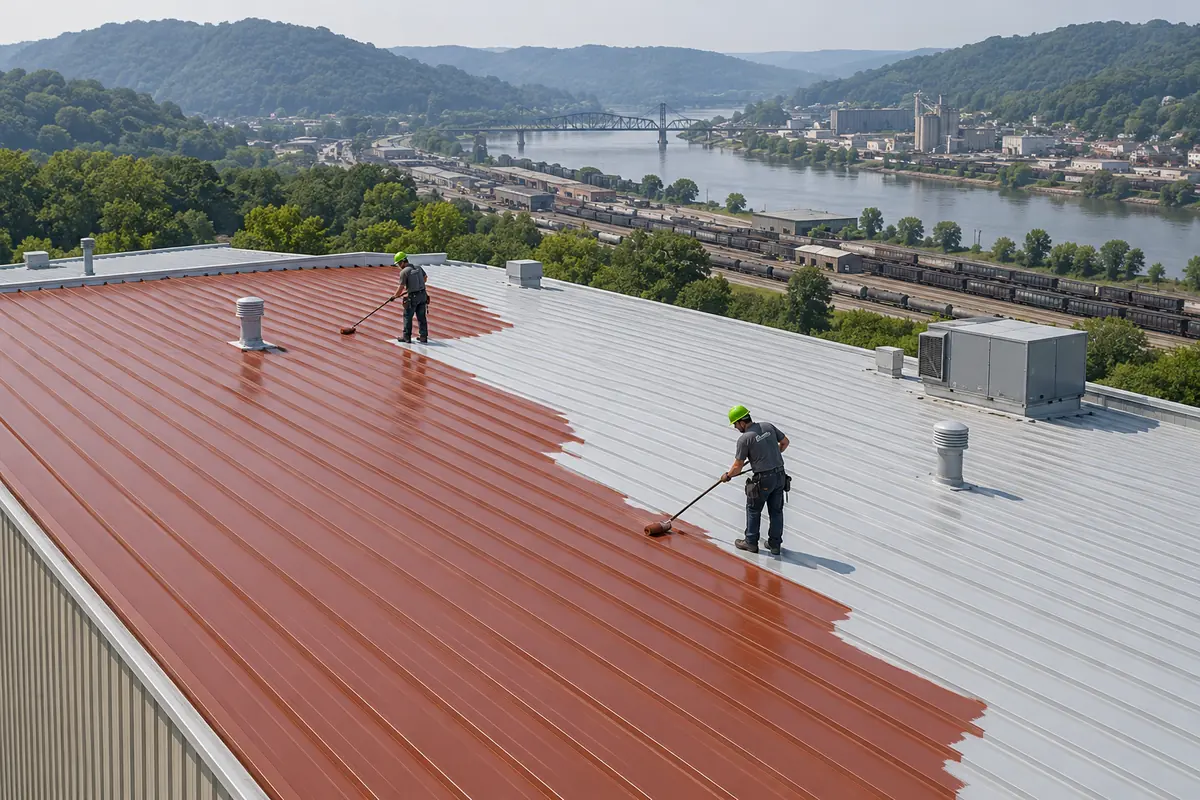
Metal Roof Coating
Our main work: exposed-fastener R-panel and standing seam roofs on warehouses, shops, and barns. Rust is primed, fasteners are sealed, and a flexible coat covers the whole roof.
Where Water Gets In
- Cracked washers on screw heads
- Side laps and end laps
- Ridge caps and trim joints
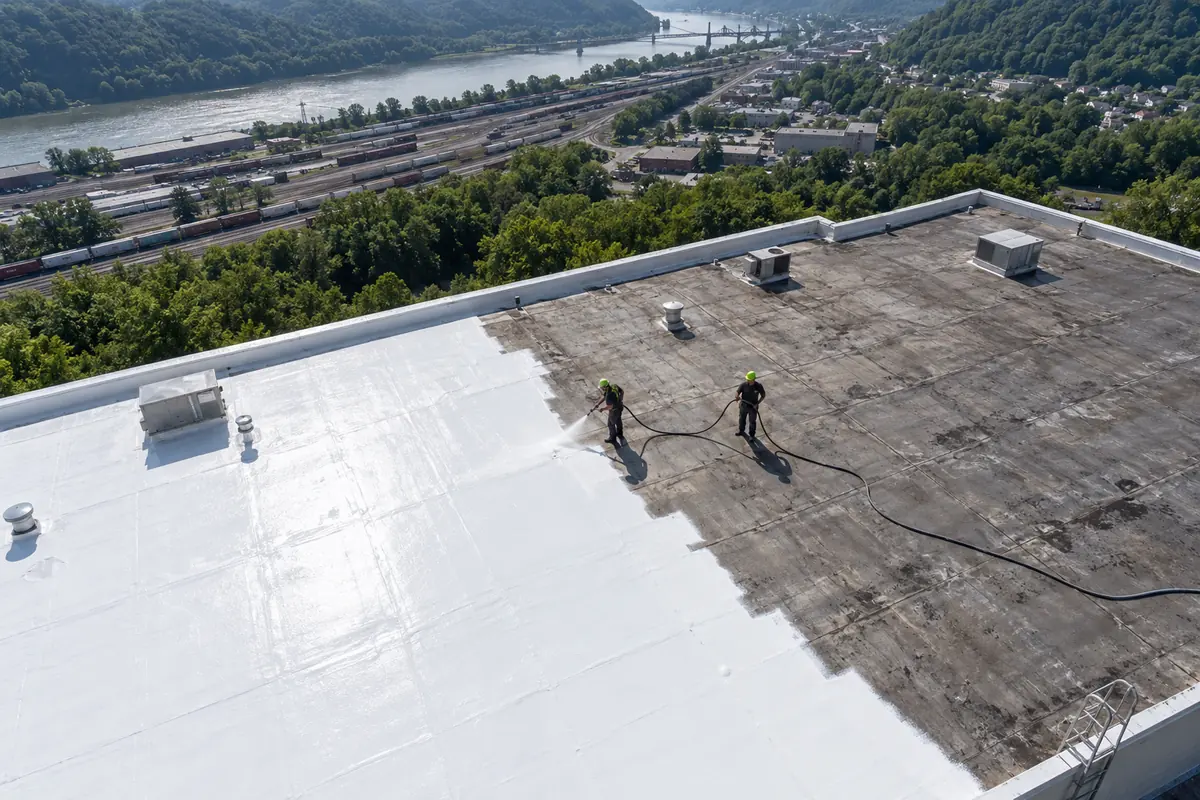
Silicone Roof Coating
Built for low spots, flat additions, and areas where water lingers after a storm. Silicone holds up under standing water, and later recoats also need silicone.
Where Water Gets In
- Low spots near gutter lines
- Upslope side of rooftop curbs
- Drains on flat sections
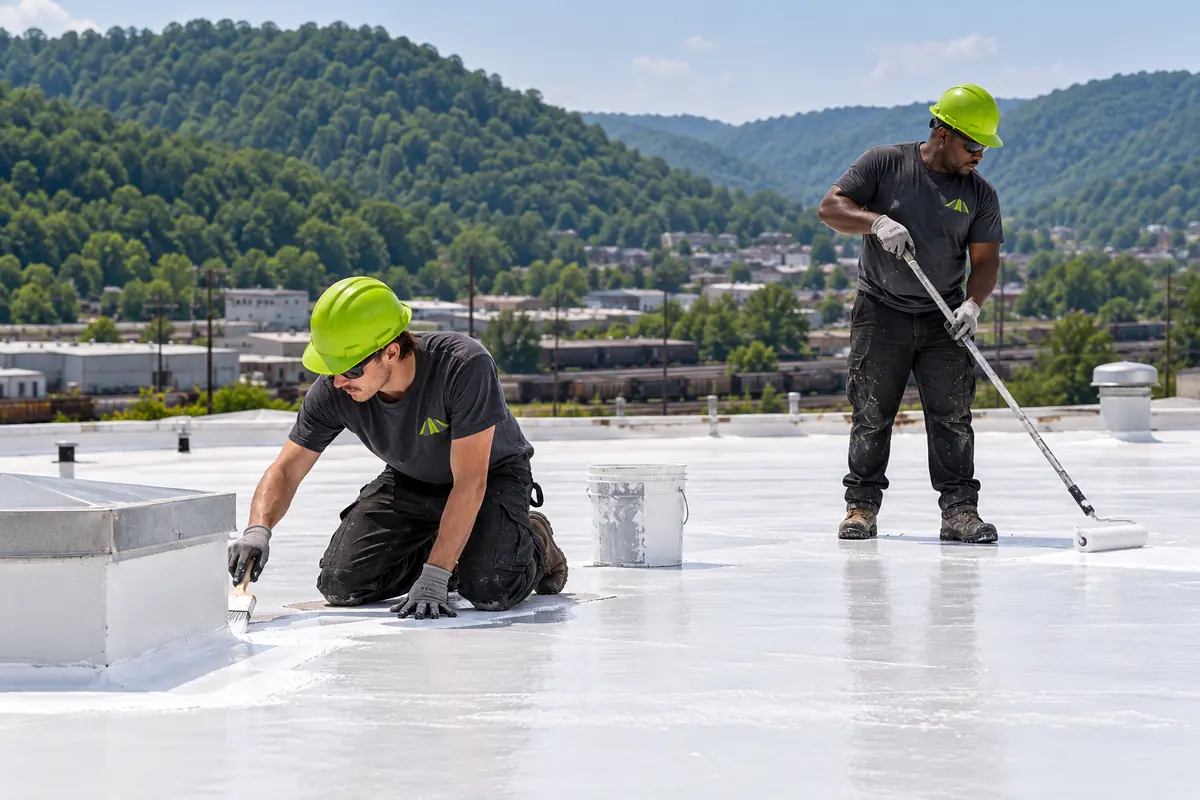
Acrylic Roof Coating
A water-based coating for well-drained roofs that shed rain fast. It keeps a clean white surface and recoats easily, and it needs dry, mild days to cure.
Where Water Gets In
- Lap seams on steep R-panel
- Skylight panel edges
- Worn factory paint at the eaves
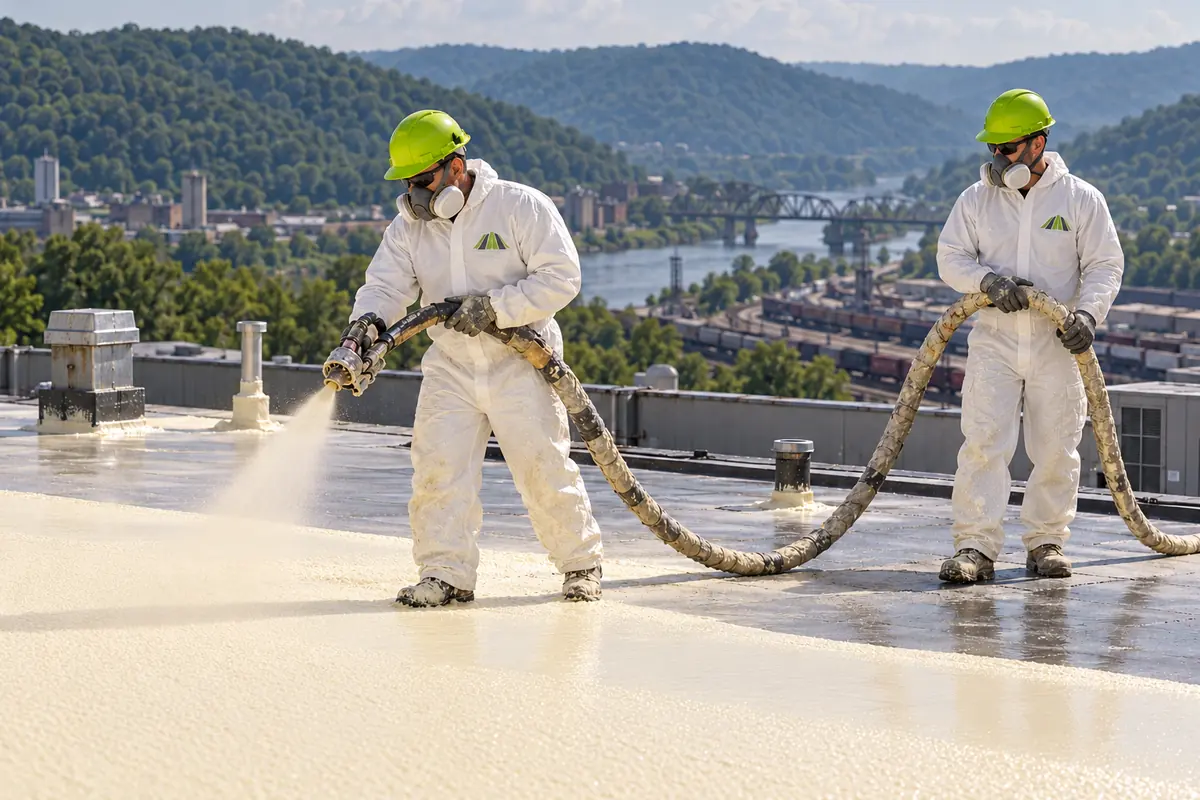
Spray Foam Roofing
Foam fills the ribs of an old metal roof, buries every fastener, and adds a continuous layer of insulation before a protective topcoat goes over it.
Where Water Gets In
- Thousands of exposed screw heads
- Condensation dripping from bare panels
- Flat sections with no slope
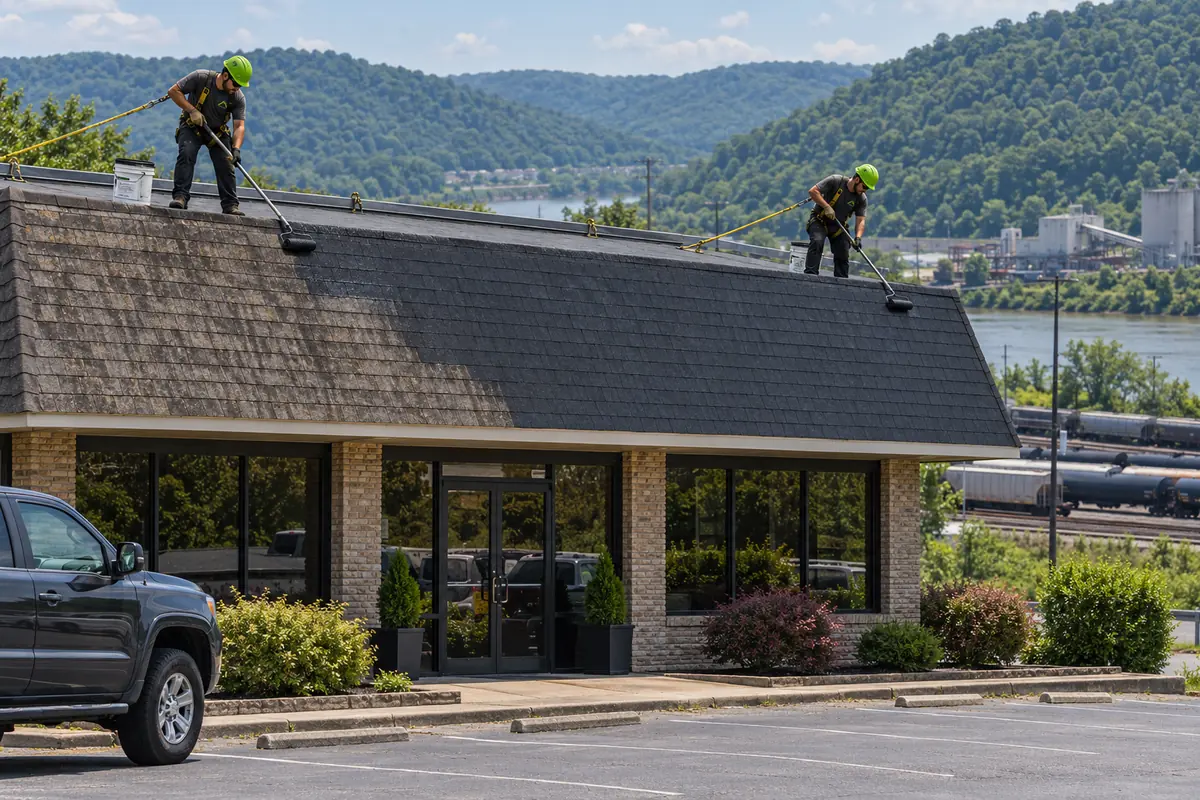
Shingle Roof Coating
For intact asphalt shingles on offices, churches, and strip centers, once the shingle maker confirms coating is allowed. Curled or brittle shingles need replacing instead.
Where Water Gets In
- Granule loss on worn tabs
- Valleys and step flashing
- Joints where shingles meet a metal canopy
Water Coming In Over The Shop Floor?
Call and tell us where the drip lands and what sits above it: a screw line, a lap, a skylight panel, or a rooftop unit. That points the inspection at the right spot.
How An Ashland Metal Roof Gets Coated
Every metal roof coating job runs in the same order. A skipped step weakens the ones after it, so each one is written on the work order before crews start.
Inspect Your Roof
On The RoofWe walk the panels and check fasteners, side laps, end laps, rust, skylight panels, and gutters, then mark each problem on a roof sketch you keep.
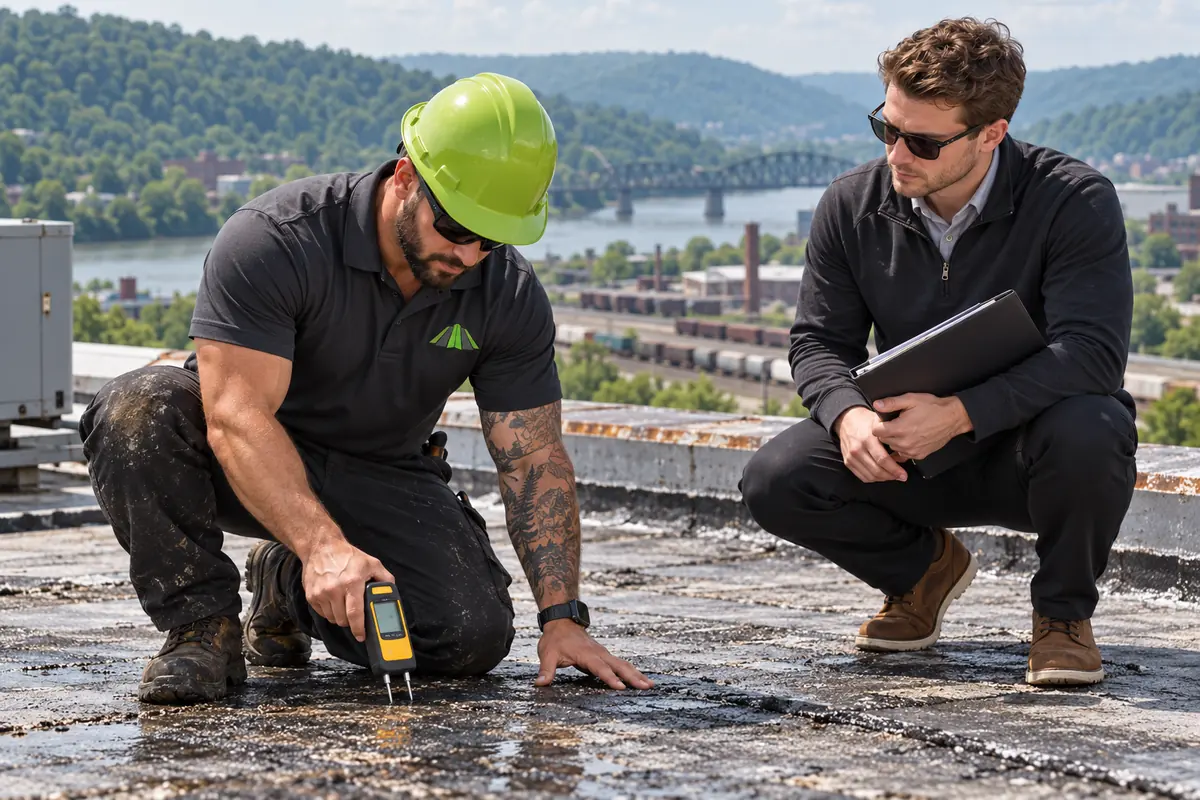
Agree On Access And Shutdowns
At The BuildingRooftop units near curb work are scheduled off with your maintenance contact, and ladder or lift spots are set away from entries and loading docks.
Wash The Panels
On The RoofPressure washing strips dirt, chalky paint, and loose rust so primer grips firm steel. Spray and runoff are kept clear of parked cars and open doors.
Fix Fasteners And Rust-Through
On The RoofStripped or rusted screws come out and oversized ones go in. Holes along laps or at gutters are cut out and patched with new steel.
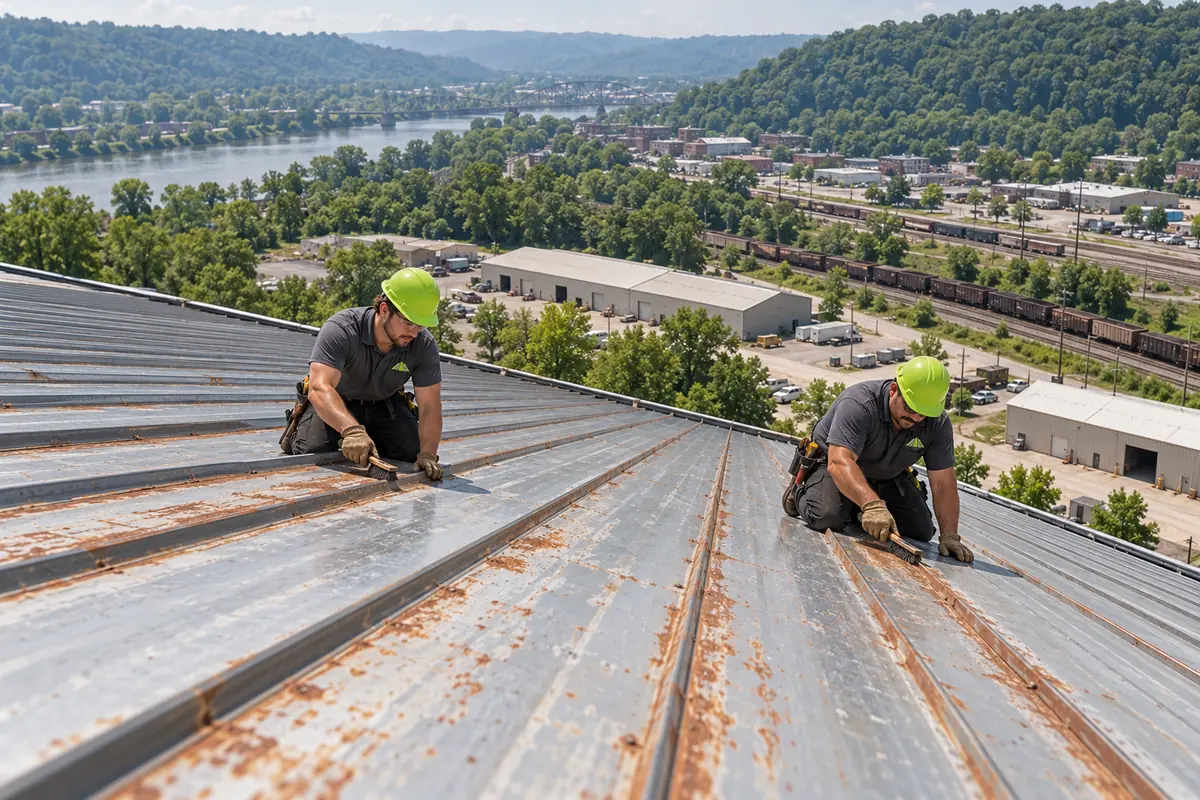
Prime And Seal The Details
On The RoofRusted areas get a rust-inhibiting primer. Laps, ridge caps, curbs, and pipe boots get fabric or seam tape set in coating.
Roll Or Spray The Field Coat
On The RoofBase and top coats go on to the specified thickness. A final walk checks coverage at the edges and around every penetration.
Coat, Restore, Re-Panel, Or Replace?
The condition of the panels decides the path. These four cases cover most commercial metal roofs we inspect around Ashland.
- If Your Roof
Has Solid Panels With Light Rust
Worn washers and tired paint on steel that still flexes normally underfoot call for cleaning, sealing, and a full coat.
Start WithCoating - If Your Roof
Mixes Good Panels With Failed Laps
Some rusted panels and split lap sealant add panel patches and heavier seam work before the coating system goes on.
Start WithRestoration - If Your Roof
Shows Rust-Through Across Large Areas
Once daylight shows through many panels, the steel itself is spent, and those sections take new panels.
Start WithRe-Paneling - If Your Roof
Sits On Damaged Purlins Or Wet Insulation
Sagging panels, soaked or crushed insulation, and storm damage to the structure point to a new roof system.
Start WithReplacement
What A Coating Does For A Metal Building
A roof coating is a thick, flexible membrane, far heavier than paint. These are the gains owners see when the panels underneath are still solid.
Leaks Sealed At The Source
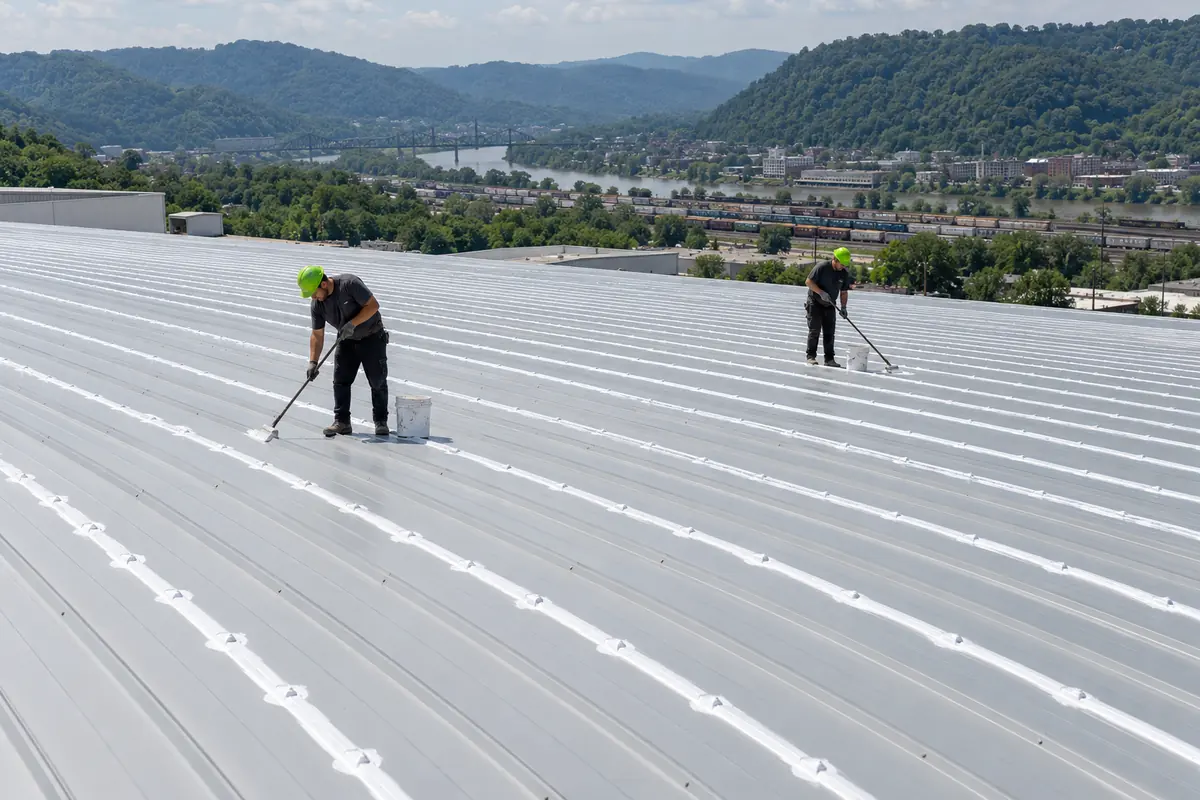
The coat bridges small gaps at side laps and wraps each screw washer, the two places most metal roof leaks start.
Rust Stopped Before Holes Form
Primer and coating cover surface rust once loose scale is brushed off, so the steel stops wearing through at laps and gutters.
Less Heat Through The Panels
A light, reflective topcoat bounces back much of the sun that faded steel soaks up. The Cool Roof Rating Council lists rated values for coatings.
Work Without A Tear-Off
Panels stay in place, so there is far less tear-off waste, and most buildings keep operating while crews work outside.
Metal Roof Coating Along The Ohio And Inland
We coat commercial roofs in Ashland and the six towns listed here. Outside them? Call us or send us a message and we will tell you whether we can take the job.
Upriver On US 23
- Ashland
Older riverfront warehouses inside the floodwall rely on clear gutters and downspouts as much as on the coat itself.
- Catlettsburg
Dew lingers where the Big Sandy meets the Ohio, so start times wait for dry steel.
Downriver On US 23
- Russell
Riverfront buildings take wind off open water at eave trim, rake trim, and ridge caps.
- Flatwoods
Offices and churches here often pair a shingled main roof with a metal canopy.
- Raceland
Long panel runs on halls and gyms open their end laps first.
- Greenup
Shops and county buildings near the Little Sandy stay open while crews coat overhead.
Inland On I-64 And US 60
- Grayson
Commercial permits run through the state office, and coating dates follow the weather window.
Quick Answers Before You Call
Short answers to what building owners ask most. The full metal roof coating FAQ covers rust, permits, weather, and each town.
- The Coating
What Does A Metal Roof Coating Do?
It lays one continuous, rubbery skin over the panels, laps, and screw heads, so water loses its way in. On an older Ashland warehouse, that skin covers surface rust, bridges small side-lap gaps, and wraps each washer. A light topcoat also reflects much of the sun that bare steel absorbs.
Can You Coat Only The Worst Section?
Yes, when the rest of the roof is in better shape. Crews often seal laps and fasteners across the whole roof, then coat the section over the leak first. Phasing spreads the cost, though each phase adds another day of setup for access and washing.
- The Job
What Happens In What Order?
Inspection comes first, then washing, fastener and rust repairs, priming, detail sealing at laps and curbs, and the field coat. Each step depends on the one before it, so a skipped wash or primer coat shows up later as peeling at the laps.
Who Inspects Roof Work Inside Ashland?
The City of Ashland handles building permits and inspections through Community and Economic Development, under code enforcement. Coating over existing panels is a lighter scope than re-paneling, so call ahead when the job adds skylight panels, moves rooftop curbs, or replaces purlins.
- Cost And Taxes
Can A Coating Count Under Section 179?
Often, yes. IRS Publication 946 lists roofs among qualifying improvements to nonresidential buildings placed in service after the building itself. For tax years beginning in 2026, the limit is $2,560,000. Keep invoices that split coating, panel work, and fasteners, and ask your CPA how to treat the project.
Is Coating Cheaper Than A New Roof?
When the panels are solid, coating skips tear-off, disposal, and new steel, which is where most of a replacement’s cost sits. A roof that needs re-paneling over large areas loses much of that gap, so the inspection findings decide which path makes sense.
Get Your Ashland Metal Roof Looked At
Book a free inspection or a ballpark estimate, and find out whether your panels are ready for a coat.